Series: Growing Papaya: From Seed to Ripe Fruit
How to Plant Papaya Seeds: The Proper Preparation and Steps
Last reviewed October 31, 2026. Seed preparation and germination guidance reflect the latest research from the University of Florida IFAS Extension, the Hawaii Department of Agriculture papaya program, and the ICAR-NRC for tropical fruits.
Plant papaya seeds in four steps: collect from a ripe fruit, rinse off the gel coat, plant ¼ inch deep in moist seed-starting mix, and keep at 75–85°F until germination in 2–3 weeks. Always plant 3 seeds per cell because germination rates are typically 50–70%. Below: a comparison table of 5 papaya varieties and answers to the five most common papaya-from-seed questions.
How do I grow papaya from seed?
Use the table below to pick a papaya variety that matches your climate and space. Papayas grow quickly once established — most varieties fruit within 9–12 months from seed. Choose a variety suited to your region's rainfall and temperature pattern.
| Variety | Days to germination | Height at 6 months | First fruit (from seed) | USDA Zone |
|---|---|---|---|---|
| Red Lady | 14–21 days | 4–5 ft | 9–12 months | 9–11 |
| Tainung #1 | 14–21 days | 4–5 ft | 8–11 months | 9–11 |
| Solo (Waimanalo) | 10–14 days | 3–4 ft | 8–10 months | 10–11 |
| Maradol | 14–21 days | 5–6 ft | 9–12 months | 9–11 |
| Formosa | 14–21 days | 4–5 ft | 9–12 months | 9–11 |
For tropical gardeners, the fastest-fruiting options are Solo (Waimanalo) and Tainung #1, both of which can produce fruit in 8–11 months under optimal conditions. For cooler-edge climates near USDA zone 9, Red Lady and Formosa are the most cold-tolerant options.
Where do I get papaya seeds?
The cheapest source is the seeds from a fruit you've already eaten — choose a fully ripe, yellow papaya and scoop out the central cluster of black seeds. Alternatively, order verified seeds from tropical plant nurseries like My Perfect Plants (papaya varieties) for guaranteed variety identity and higher germination rates.
If you're collecting seeds from a market fruit, the variety is often unknown and named “generic papaya”. That's fine for home gardens but not for orchard-style plantings where you want predictable fruit size, color, and yield. Label each batch of collected seeds with the date and the source fruit.
Do I need to dry papaya seeds before planting?
For immediate planting (within the same day), no — plant fresh seeds directly after rinsing. For storage lasting more than a few weeks, dry the seeds first to prevent mold. Drying is simple: spread the rinsed seeds on a paper towel in a dark, warm place for 7–14 days, then seal in a labeled paper envelope.
Properly dried and stored papaya seeds remain viable for up to 16 months. The seeds store best in a cool, dark location — a refrigerator (in a paper envelope, not plastic) works. Don't freeze them; freezing destroys the embryo.
How do I remove the gel coat from papaya seeds?
The gel coat around fresh papaya seeds contains germination inhibitors that prevent premature sprouting inside the fruit. To remove it: soak the seeds in a small container of room-temperature water overnight, then rub them gently through a fine-mesh strainer to dislodge the gel. Rinse thoroughly and dry before planting or storing.
The gel coat is the most common reason papaya seeds fail to germinate. Without removing it, germination rates drop to 20–30%; with proper gel coat removal, rates climb to 60–80%. Skipping this step is the single biggest mistake in papaya-from-seed gardening.
How deep should I plant papaya seeds?
Plant seeds about ¼ inch (6 mm) deep in moist seed-starting mix. Deeper than ½ inch slows germination; shallower than ⅛ inch causes the seed coat to dry out before the radicle can anchor. Press the soil lightly over each seed to ensure good soil contact.
Use a peat-based or coco-coir-based seed-starting mix rather than garden soil. The mix should be pre-moistened but not waterlogged. Plant 3 seeds per 4-inch pot or cell to compensate for the typical 50–70% germination rate.
How long does it take for papaya seeds to sprout?
Papaya seeds germinate in 10–21 days under proper conditions, with most varieties sprouting in 14–18 days. Solo (Waimanalo) is the fastest at 10–14 days. Red Lady, Tainung, and Formosa typically take 14–21 days.
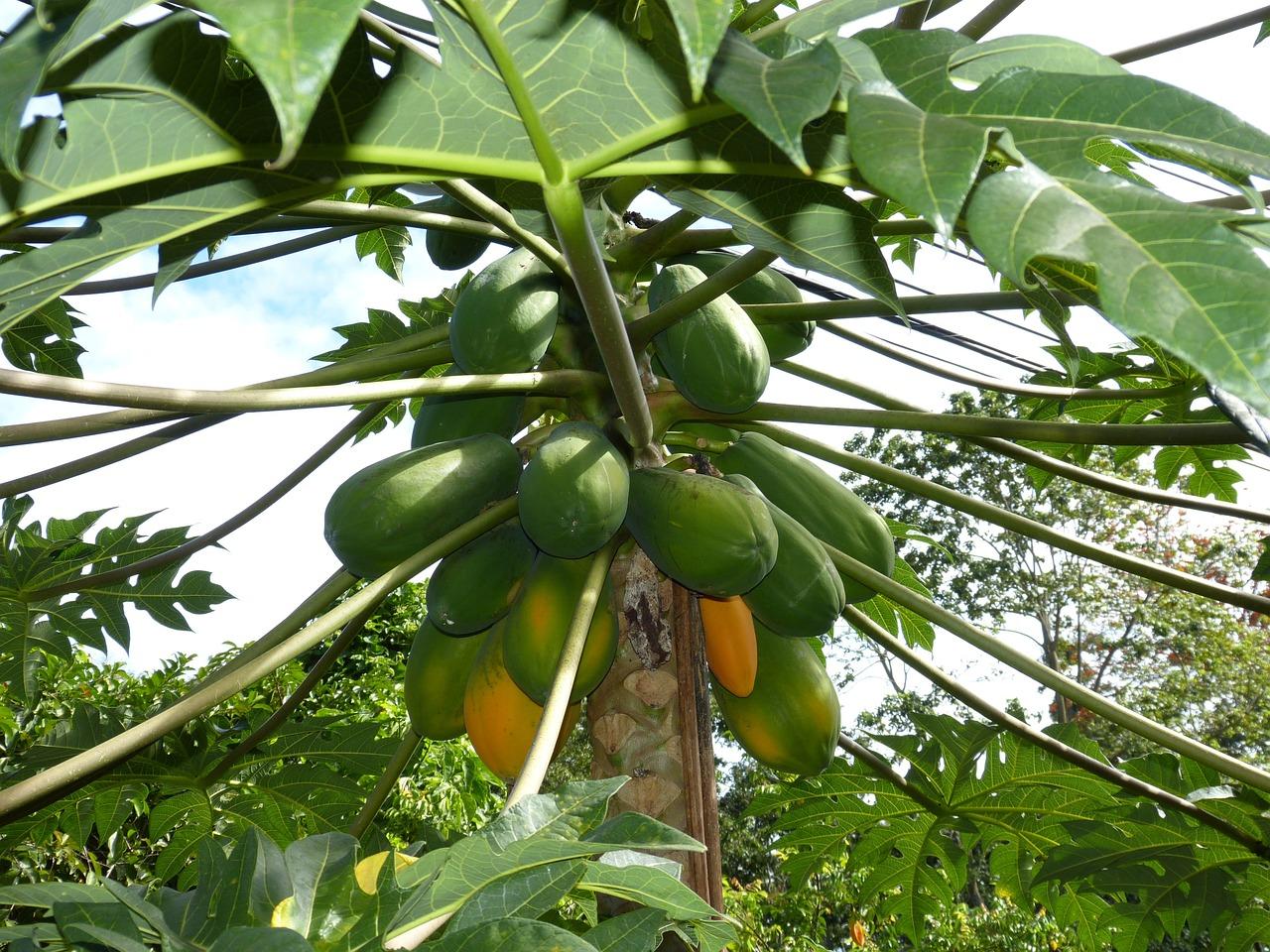
The three biggest factors that affect germination time are temperature (75–85°F is optimal), consistent moisture (never let the seed-starting mix dry out completely), and seed freshness (seeds stored less than 6 months germinate 20–30% faster than 12-month-old seeds).
Should I soak papaya seeds before planting?
Yes — soaking for 12–24 hours in room-temperature water before planting improves germination rates by 15–25% and reduces average germination time by 2–3 days. The soak mimics the natural moisture exposure that triggers germination inside the fruit.
For maximum effect, combine the soak with the gel coat removal step from above. Soaking also after-rinsing softens the seed coat and signals to the embryo that moisture is available. Don't soak for more than 48 hours — the seeds will start to rot.
When should I transplant papaya seedlings?
Transplant papaya seedlings once they reach 4 inches (10 cm) tall and have at least 2–3 true leaves, typically 4–6 weeks after germination. By this stage, the root system has developed enough to handle transplant, but the seedlings are still small enough to recover quickly.
For in-ground transplanting, wait until soil temperatures are consistently above 70°F (21°C) and overnight temperatures stay above 55°F (13°C). Papaya seedlings are frost-sensitive, so cold-climate gardeners should grow in containers and bring indoors during cool months.
Can I grow papaya from store-bought fruit?
Usually yes, with caveats. The seeds from a store-bought papaya will grow, but the resulting plant may not produce fruit identical to the parent fruit because most commercial papayas are F1 hybrids. The second-generation plant may fruit, but with unpredictable size and quality.
For predictable fruit, buy named-variety seeds from a reputable tropical nursery. For home gardeners experimenting with papaya on a budget, store-bought seeds work fine — just don't expect identical fruit across generations. If you want consistency, plant multiple seedlings from the same source fruit and select the best performer.
How many papaya seeds should I plant per pot?
Plant 3 seeds per 4-inch pot or seed cell. Papaya germination averages 50–70%, so 3 seeds typically produces 1–2 strong seedlings. After the seedlings reach 3 inches, thin to the strongest single seedling per pot by snipping the others at the soil line (avoid pulling, which disturbs the keeper's roots).
If you want multiple fruiting trees, plant 5–7 seeds in a 1-gallon pot and transplant the strongest 2–3 individual seedlings into separate pots once they're 4 inches tall. Papaya trees produce best when planted in groups of 2–3, since cross-pollination improves fruit set.
Why are my papaya seedlings dying?
Three causes account for 90% of papaya seedling deaths: damping-off fungal infection, overwatering leading to root rot, and cold exposure. The fix depends on which cause:
- Damping-off: Stems collapse at the soil line. Caused by a fungus in damp seed-starting mix. Use sterile mix, improve air circulation, and avoid watering from above.
- Root rot: Seedlings yellow and wilt. Pull up a dying seedling to check; rotted roots are brown and mushy. Reduce watering frequency and improve drainage.
- Cold exposure: Leaves darken or curl at temperatures below 55°F (13°C). Move indoors or provide heat mat under the pots.
The most reliable preventive measure is to use fresh seed-starting mix (don't reuse old mix, which may harbor fungal spores), water from below (so the stem stays dry), and keep temperatures between 70–85°F until the seedlings are 6 inches tall.
Final Thoughts
The shortest useful answer: plant papaya seeds ¼ inch deep in moist seed-starting mix, 3 seeds per cell, at 75–85°F, and expect germination in 14–21 days. Thin to the strongest seedling once it reaches 3 inches tall and transplant to a 4-inch pot once it reaches 6 inches with 2–3 true leaves.
Once your papaya tree produces fruit, the next question is how to know when it's ripe. See our guide on how to tell if a papaya is ripe for the 4 reliable indicators (color, touch, aroma, flesh) and answers to common ripeness questions.
Frequently Asked Questions About Planting Papaya Seeds
How fast do papaya trees grow from seed?
Papaya grows faster than most fruit trees, reaching 4–6 ft in 6 months and fruiting in 8–12 months from seed. The Solo and Tainung varieties are the fastest, producing fruit within 8–10 months under optimal conditions. For most home gardeners, the 9–12 month window to first fruit feels fast compared to apple (3–5 years) or mango (3–5 years).
Can papaya grow in containers?
Yes — papaya grows well in 5-gallon containers for the first 2–3 years, after which it benefits from up-potting to 10–15 gallons. Choose a dwarf or compact variety (such as Solo) for long-term container growing. Standard papaya varieties will outgrow a 10-gallon pot within 2–3 years, requiring either transplant to ground or replacement.
Do papaya trees need cross-pollination?
Most papaya varieties are self-pollinating, so a single tree will produce fruit. However, planting 2–3 trees in proximity increases fruit yield by 15–25% through cross-pollination. Some varieties (especially Tainung #1) have male, female, and hermaphrodite plants — only female and hermaphrodite trees produce fruit, so plant at least 3–4 seedlings to ensure you have fruit-bearing trees.
What soil pH do papaya trees prefer?
Papaya prefers slightly acidic to neutral soil with pH 6.0–7.0. Outside this range, nutrient uptake is reduced. If your soil pH is below 5.5, add agricultural lime at planting time. If above 7.5, add elemental sulfur or organic matter (peat, pine needles) to lower the pH gradually over 2–3 months. Test soil pH before planting and adjust as needed.
When can I expect my papaya tree to fruit?
Most papaya varieties fruit in 8–12 months from seed under optimal conditions (tropical climate, well-drained soil, regular fertilization). In subtropical climates or in containers, expect 12–18 months to first fruit. Once flowering begins, fruit develops within 4–6 months depending on temperature. The tree continues fruiting for 3–5 years before slowing significantly.
Last updated: October 31, 2026
Related Plant Tips
These 8+ Low Maintenance Edible Plants For Tropical Climates - Perfect for Busy Gardeners
If you love fresh food but don’t have time for constant watering, fertilizing, and pest control, choosing low maintenanc…
Read →
Stop Cutting Your Mango Tree the Wrong Way!
These Pruning Techniques Pruning Techniques For Mango Trees To Increase Fruiting Dramatically…
Read →
Want Bigger Papayas Faster?
Learn How To Grow Papaya Faster With Organic Soil Boosters…
Read →