The Ultimate Buying Guide for Beautiful, Low-Mess Landscaping Near Pool (2026)
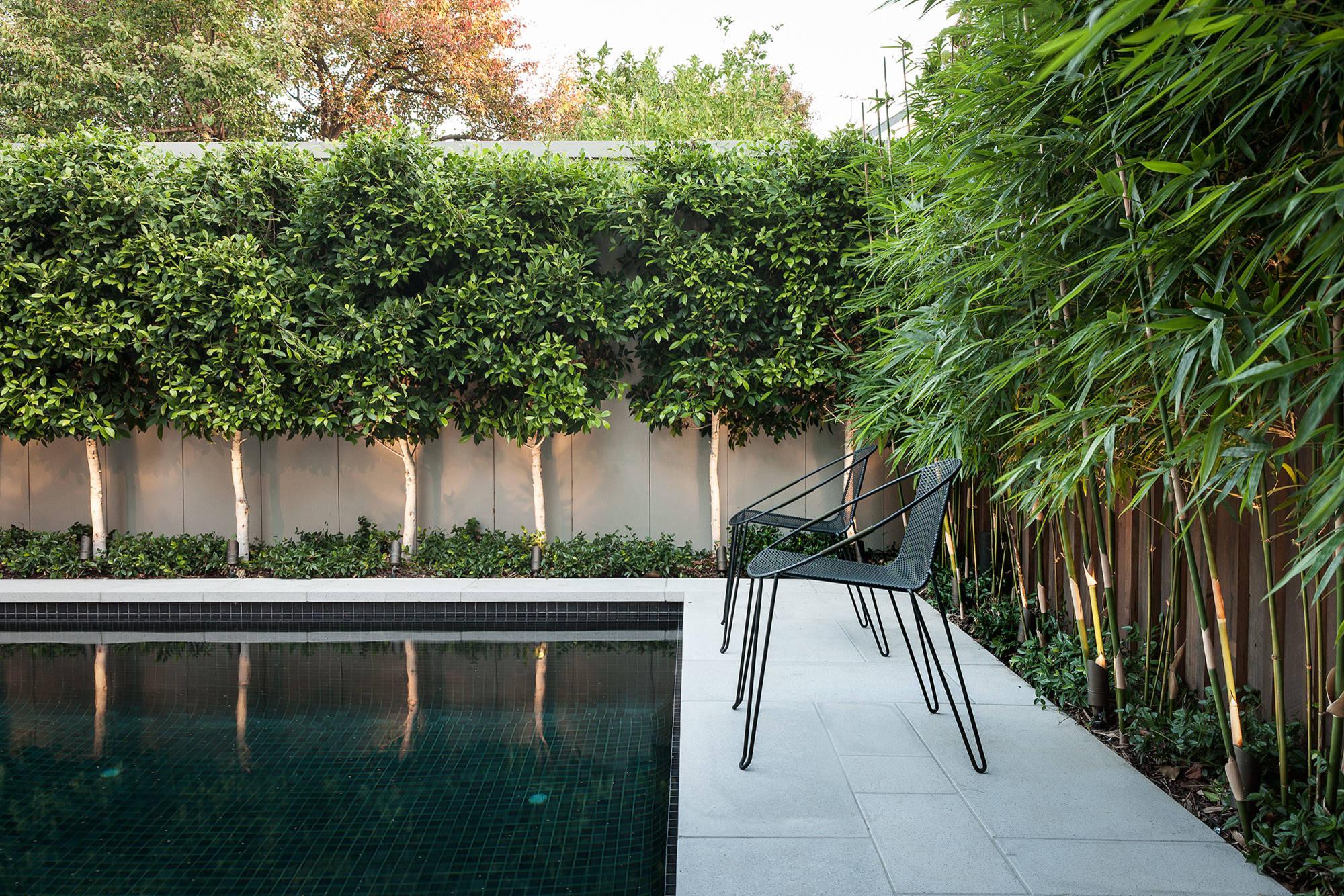
A backyard pool is meant to be a private escape, a place to relax, unwind, and enjoy time with family and friends. But without the right landscaping, it can quickly feel exposed. Neighboring windows, second story decks, and nearby homes often overlook pool areas, creating a lack of comfort and privacy. That’s why choosing the best trees for pool privacy is one of the most important decisions you’ll make when designing your outdoor space.
However, privacy isn’t the only concern. Pools come with unique landscaping challenges. Leaves clog filters. Dropping flowers stain surfaces. Invasive roots can damage pool shells, plumbing, and paving. High-maintenance plants quickly turn your serene retreat into a weekly cleanup project. Selecting the wrong tree can cost you time, money, and endless frustration.
The goal is balance: privacy, beauty and also low maintenance. This guide helps you choose the PERFECT tree. From root behavior to growth speed, from climate compatibility to maintenance level, we’ll break down everything you need to know before planting. Let’s get started.
What Makes a Tree Good for Pool Privacy
Selecting the best trees for pool privacy isn’t just about height. Several critical factors determine whether a tree will enhance or sabotage your pool landscape.
Root Behavior
Roots are the hidden danger. Trees with aggressive root systems can crack pool shells, lift decking, and interfere with plumbing. Ideal privacy trees around pool areas have non-invasive or compact root structures. Always research root spread before planting.
Leaf Drop
Heavy leaf shedding trees mean constant skimming and clogged filters. Low mess trees for pools typically have evergreen foliage, smaller leaves, or self-cleaning habits (like many palms).
Growth Speed
Fast growing trees provide quicker screening but may require more pruning. Slower growers often have stronger structure and lower maintenance. The key is balance, moderate growth with manageable upkeep.
Climate Compatibility
Always choose trees suited to your USDA zone or regional climate. Heat tolerant, drought resistant trees are ideal in warmer areas, while cold-hardy evergreens perform better in northern regions.
Height Control
You want tall coverage without uncontrollable spread. Columnar or upright trees are excellent trees to plant near pool spaces because they maximize vertical screening without overwhelming the yard.
Shade vs Privacy
Dense foliage blocks views but may create too much shade, cooling the water excessively. Some homeowners prefer filtered light rather than total blockage.
10 Best Types of Trees for Pool Privacy
Choosing the best trees for pool privacy isn’t just about blocking the view, it’s about creating a peaceful, low-maintenance retreat. The right trees will provide year round screening, minimize leaf mess, and thrive in your climate without aggressive roots damaging your pool. Below are ten of the most effective and attractive options to help you design a private backyard oasis :
Italian Cypress (Cupressus sempervirens)
Italian Cypress is an iconic tall, slender evergreen that exudes elegance. Its narrow columnar form makes it ideal for creating vertical privacy barriers without consuming much horizontal space.
Why It Works for Pool Privacy:
Italian Cypress provides a dramatic screen that blocks views while adding architectural appeal. Its tight, upright growth pattern means minimal pruning is required to maintain shape, and its evergreen foliage ensures year round privacy.
Pros:
✔ Extremely narrow footprint (great near fences)
✔ Evergreen foliage year-round
✔ Low leaf drop
✔ Works in tight planting strips
Cons:
✘ Limited shade canopy, more privacy than cooling
✘ Can suffer in extreme cold without protection
Ideal Climate: Warm to Mediterranean (USDA zones 7-10)
Maintenance Level: Low
Growth Rate: Moderate (30-60 cm/1-2 ft per year)
Bamboo (Clumping Varieties Only)
Clumping bamboo is one of the fastest growing and most effective privacy screens available. Unlike running bamboo, clumping types grow in tight clumps and won’t invade underground areas.
Why It Works for Pool Privacy:
Bamboo’s dense foliage and upright canes create a living wall that blocks views and reduces wind. It’s especially powerful for taller barriers and the swaying canes add a tropical aesthetic perfect for modern pool landscaping.
Pros:
✔ Very fast screening
✔ Tropical aesthetic
✔ Excellent wind break
Cons:
✘ Needs regular thinning/pruning
✘ Avoid running bamboo (invasive)
Ideal Climate: Warm, humid to temperate (USDA zones 7-11)
Maintenance Level: Moderate
Growth Rate: Very fast (up to 1-2 m/3-6 ft per year)
Banana Trees (Musa spp.)
Banana trees are bold, lush plants with large leaves that create a tropical vibe. While technically not evergreen trees, their size and growth habit make them excellent for privacy layering.
Why It Works for Pool Privacy:
Banana trees around pool areas create a dense, leafy backdrop that blocks sightlines and filters light. Their dramatic leaves also provide partial shade, cooling the pool zone.
If your winters are too cold for tropical bananas, the cold-hardy Basjoo banana tree bounces back from freezes and still delivers that lush, leafy privacy screen.
Pros:
✔ Tropical aesthetic
✔ Fast leaf growth
✔ Great for shade + visual privacy
Cons:
✘ Leaves tear in wind
✘ Can drop large leaves in storms
Ideal Climate: Warm, frost-free (USDA zones 9-11)
Maintenance Level: Moderate
Growth Rate: Fast (often 1-2 m/3-6 ft per season)
Podocarpus (Podocarpus macrophyllus)
Podocarpus is also the most ideal tree for pool privacy. It is a versatile evergreen tree/shrub that forms a dense, upright screen. It’s prized for its leathery foliage and adaptability to formal hedges or natural screens.
Why It Works for Pool Privacy:
Podocarpus grows steadily into a lush green wall, with minimal leaf litter. Its foliage stays thick from top to bottom, unlike some trees that thin out near the trunk which is ideal for uninterrupted privacy.
Pros:
✔ Dense foliage
✔ Low leaf drop
✔ Responds well to pruning
Cons:
✘ Slower growth than some evergreens
✘ Needs moisture during establishment
Ideal Climate: Warm temperate to subtropical
Maintenance Level: Low to moderate
Growth Rate: Moderate
Ficus Nitida (Ficus microcarpa ‘Nitida’)
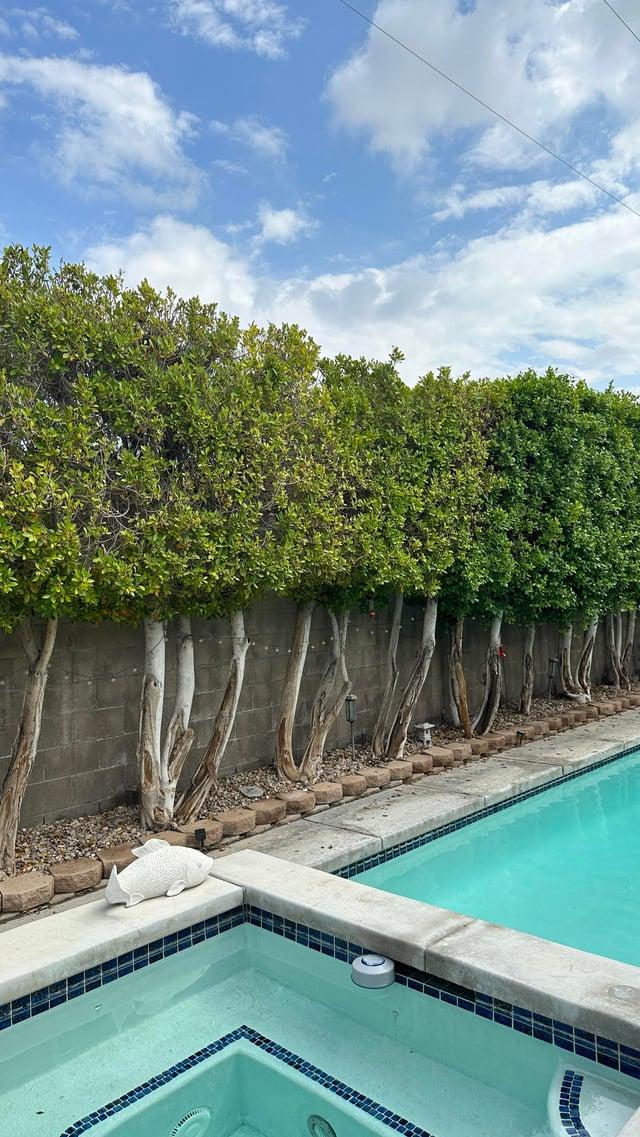
Also known as Indian Laurel Fig, Ficus Nitida forms thick evergreen canopies that can be trained as tall hedges or trees.
Why It Works for Pool Privacy:
Ficus Nitida’s small glossy leaves produce minimal mess while its dense branching blocks considerable sightlines. It can be shaped into formal hedges, layered screens, or canopy trees for multi-layered privacy.
Pros:
✔ Very dense foliage
✔ Great screening
✔ Takes pruning well
Cons:
✘ Can develop surface roots if planted too close
✘ Needs regular shaping
Ideal Climate: Warm subtropical to tropical
Maintenance Level: Moderate
Growth Rate: Fast
Areca Palm (Dypsis lutescens)
Areca Palm is a clumping palm with feathery fronds that create an elegant, tropical screen.
Why It Works for Pool Privacy:
The layered fronds of Areca Palm filter light beautifully while still blocking sightlines. They create a relaxed, island-style atmosphere and are self-cleaning, meaning less debris in your pool.
Pros:
✔ Self-cleaning fronds
✔ Tropical look
✔ Good light filtration
Cons:
✘ Not frost-tolerant
✘ Needs water in hot climates
Ideal Climate: Warm tropical/subtropical
Maintenance Level: Low to moderate
Growth Rate: Moderate
Magnolia (Evergreen Varieties)
Evergreen Magnolias like ‘Little Gem’ or ‘Teddy Bear’ offer glossy foliage and showy blooms while providing a dense screen.
Why It Works for Pool Privacy:
Magnolias form lush canopies with thick leaves that block sightlines and reduce wind. Their elegant form and flowers add beauty as well as privacy.
Pros:
✔ Dense evergreen coverage
✔ Adds aesthetic value
✔ Flowers add year-round interest
Cons:
✘ Some varieties can drop blooms
✘ Moderate maintenance
Ideal Climate: Warm temperate
Maintenance Level: Moderate
Growth Rate: Moderate
Leyland Cypress (× Cupressocyparis leylandii)
One of the fastest growing privacy trees, Leyland Cypress forms a tall evergreen wall.
Why It Works for Pool Privacy:
When planted in rows, Leyland Cypress creates a nearly instant vertical privacy screen. Its dense foliage provides year-round cover and wind protection.
Pros:
✔ Rapid growth
✔ Excellent screening
✔ Evergreen
Cons:
✘ May need trimming to control width
✘ Some disease susceptibility
Ideal Climate: Mild temperate
Maintenance Level: Moderate
Growth Rate: Very fast
Arborvitae (Thuja spp.)
Arborvitae includes many top choices for privacy landscapes, such as ‘Green Giant’ and Emerald Green varieties.
Why It Works for Pool Privacy:
Arborvitae is a classic privacy hedge tree: evergreen, dense, and low-mess. It rarely sheds heavily and stays full from ground to crown, making it ideal for screening around pool edges.
Pros:
✔ Dense evergreen
✔ Low leaf drop
✔ Easy shaping
Cons:
✘ Needs moisture in dry climates
Ideal Climate: Wide adaptability
Maintenance Level: Low
Growth Rate: Moderate to fast
Pittosporum Tenuifolium
A versatile evergreen shrub/tree with glossy foliage and a refined texture.
Why It Works for Pool Privacy:
Pittosporum forms a thick hedge with small leaves that drop very little, making it a great low-mess choice. Its compact growth and adaptable structure work well for layered privacy zones around pools.
Pros:
✔ Low leaf drop
✔ Attractive foliage
✔ Works as hedge or tree
Cons:
✘ Slow-moderate growth
Ideal Climate: Temperate to warm
Maintenance Level: Low
Growth Rate: Moderate
Trees to AVOID Near Pools
Choosing the best trees for pool privacy needs some consideration. Not all trees are suitable for poolside planting, and choosing the wrong one can create constant maintenance problems or even structural damage.
First, avoid messy deciduous trees that drop excessive leaves, flowers, seed pods, or needles. Trees like sweetgum, jacaranda, or large maples may look beautiful, but they can quickly clog pool filters and increase cleaning time.
Second, stay away from trees with aggressive or invasive root systems. Species such as willows, poplars, and certain ficus varieties are known for seeking out water sources. Their roots can lift pool decking, crack tiles, or damage plumbing lines if planted too close.
Fruit-bearing trees are another poor choice near pools. While citrus or stone fruit trees may seem attractive, fallen fruit attracts insects, stains pool surfaces, and creates slippery hazards.
Finally, avoid brittle trees prone to branch drop in storms. Large eucalyptus or fast-growing softwood trees can shed limbs, creating safety risks and debris issues.
How to Plant Trees Around Pools
Proper planting is just as important as choosing the right species. Start by positioning trees at a safe distance from the pool shell. As a general rule, small ornamental trees should be planted at least 6-8 feet away, while larger screening trees should be placed 10-20 feet away depending on mature root spread.
Spacing between trees also matters. For a dense privacy hedge, plant trees according to their mature width, typically spacing them 3-6 feet apart for columnar varieties and 6-10 feet apart for broader evergreens. Overcrowding can lead to poor airflow, disease, and uneven growth.
Before planting, prepare the soil properly. Loosen compacted ground and incorporate organic matter to improve drainage. Pools often sit on compacted soil bases, so ensuring roots can establish properly is essential.
Install root barriers if you are planting moderately vigorous species near hardscaping. This adds long-term protection against root spread toward decking or plumbing. Finally, mulch around the base of each tree to retain moisture and suppress weeds but keep mulch a few inches away from the trunk to prevent rot.
Maintenance Tips
Even low mess trees require some care to stay healthy and attractive. Regular pruning is essential to maintain shape, control height, and encourage dense foliage for privacy. For most evergreen screening trees, light trimming once or twice a year is sufficient. Avoid heavy pruning during extreme heat or frost periods.
Watering is also very important during the first one to two years while trees establish strong root systems. Deep, infrequent watering encourages roots to grow downward rather than spreading near the surface. Once established, many privacy trees become drought tolerant, reducing long-term maintenance.
Pest and disease monitoring should be routine. Inspect leaves for discoloration, holes, or fungal growth. Early treatment prevents larger issues that could thin out your privacy screen.
Fertilize in early spring with a balanced slow release fertilizer to promote healthy growth. Avoid over-fertilizing, as rapid growth can lead to weak branches and more pruning work.
Final Buying Tips
When purchasing the best trees for pool privacy, always consider long-term performance over short-term price.
Buy from reputable local nurseries. Make sure they provide clear information about mature height, root behavior, and climate suitability.
Choose tree sizes carefully. Smaller, younger trees are more affordable and establish faster, but they require patience. Larger specimens provide immediate privacy but cost more and may need professional planting.
Timing also matters. The best seasons to plant are typically early spring or fall, when temperatures are mild and roots can establish without extreme heat stress.
Check plant labels. Carefully check for growth rate, sun requirements, and water needs. If you live in a windy or coastal region, confirm salt and wind tolerance.
Finally, visualize your long-term landscape plan. Consider layering trees with shrubs or ornamental grasses for a natural, balanced privacy solution rather than relying on a single species. For the shrub layer, Green Mountain boxwood is a proven performer: a dense evergreen hedge that stays tidy, handles heat, and drops almost nothing into the water.
FAQ Related with Best Trees for Pool Privacy
Selecting the best trees for pool privacy often comes with practical questions about spacing, maintenance and caring. Below are clear, expert-backed answers to the most common concerns homeowners have when planting trees near a pool.
1. How far should trees be planted from a pool?
Small trees should be planted at least 6–8 feet away, while larger trees should be 10–20 feet away depending on mature root size and canopy spread.
2. Which tree drops the least leaves near a pool?
Evergreen trees like Italian Cypress, Arborvitae, and Podocarpus tend to produce minimal leaf litter compared to deciduous varieties.
3. What is the fastest growing privacy tree?
Leyland Cypress and clumping bamboo are among the fastest growing privacy options, often adding several feet per year under ideal conditions.
4. Are banana trees good around pools?
Banana trees create a lush tropical look and grow quickly, but their large leaves can tear in wind and may require occasional cleanup.
5. Do poolside trees damage pool foundations?
Only certain species with invasive roots pose risks. Choosing non-aggressive root systems and planting at proper distances prevents damage.
6. What trees are best for small pool areas?
Italian Cypress and narrow Arborvitae varieties work well because they provide height without taking up much horizontal space.
7. Should I choose shade trees or screening trees?
It depends on your goal. Screening trees block visibility, while shade trees cool the area. Many homeowners combine both for maximum comfort.
8. Can privacy trees survive pool chemicals?
Most trees are unaffected if planted at proper distances. However, avoid constant splash exposure and ensure proper soil drainage.
Installing privacy trees around the pool starts with the right choice. The perfect balance of beauty, shade, and low-mess privacy is just one smart decision away. Don’t wait until peak season when the best varieties sell out, check current prices on recommended trees today and secure the ideal privacy solution for your pool landscape.